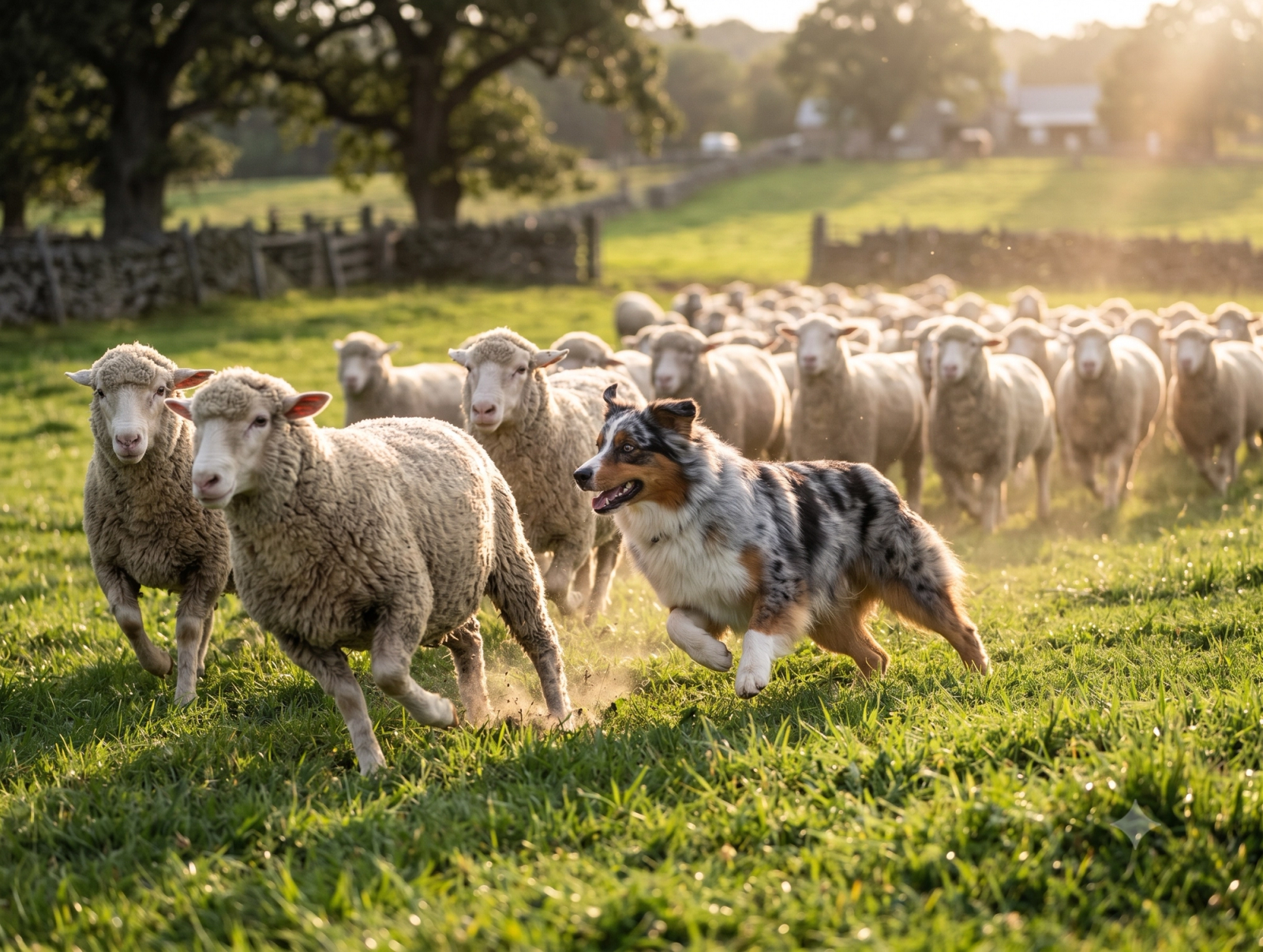
I decided to write an article about the Australian Shepherd breed standard because the deeper you dive into our breed, the clearer you understand that it isn't just a bureaucratic set of rules—it is an entire engineering blueprint. What is written there, and why? Why are certain angles mandatory while judges frown upon others?
A huge push to understand these "whys" came from Nannette L. Newbury’s book (I’ll admit—in reality, I’ve conquered just over half of this bible, so if you don't get tired of reading, there will definitely be a second part!). The author opened the door to understanding why the standard is not a dry sheet of paper, but a living explanation of our working dogs.
And you know what? Reading this book isn't like flipping through an encyclopedia while lying in bed. It's practically an interactive game: you read a paragraph, jump out of your seat, grab a measuring tape, and track down your girls. So yes—my Arka and Tonga have already been measured crosswise and lengthwise, right from the tip of their noses to... well, to the spot where a tail is supposed to be!
The Standard: Why do we need it if we aren't show-ring "snobs"?
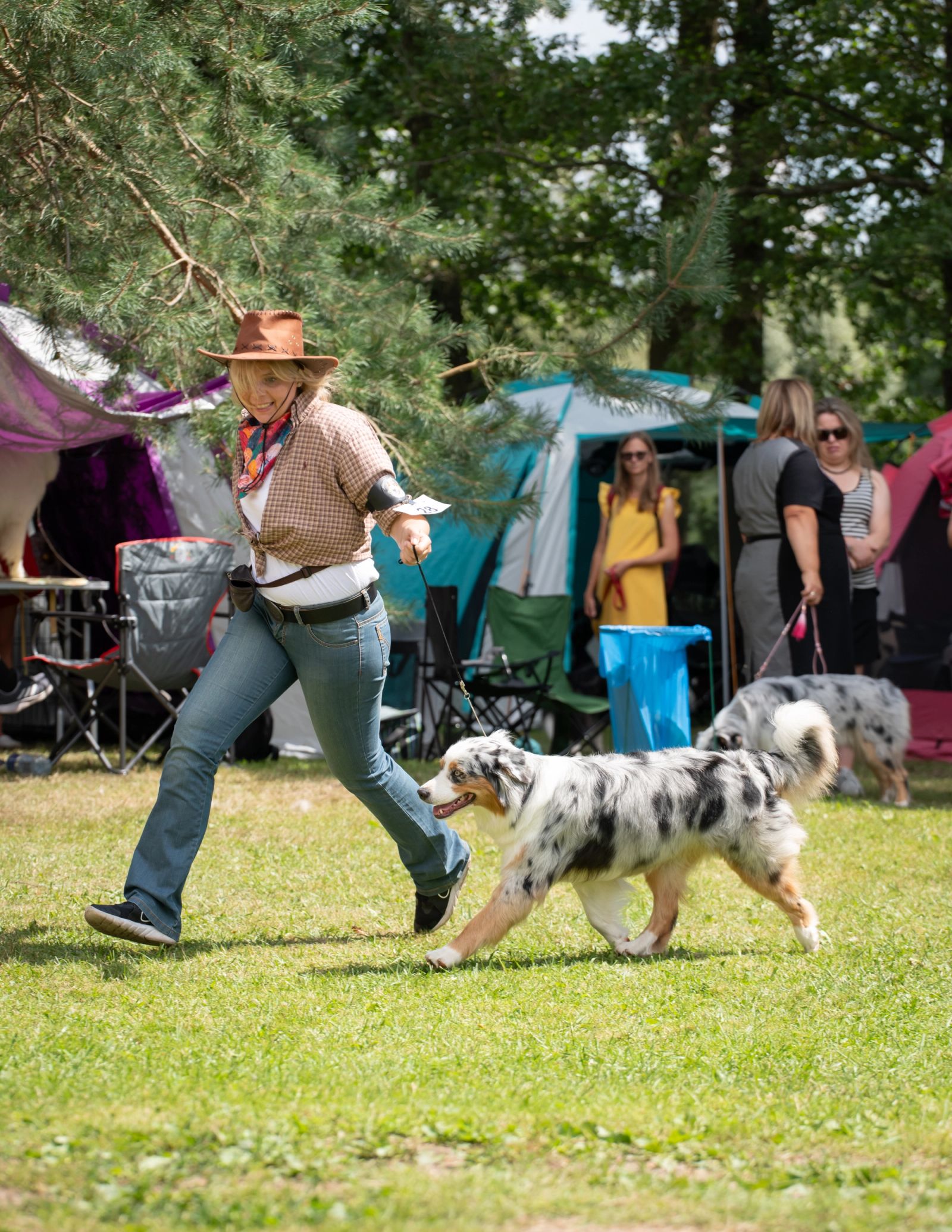
Simply and clearly: the standard is a document that breeders and judges follow to maintain the breed's purity and true purpose. Reading it just like a legal document is often boring—it's sprinkled with facts, percentages, and centimeters, but lacks that spicy "but why?".
This is where the fun begins. The more you read the explanations, the more you realize: the standard doesn't protect "beauty for the sake of beauty" or coat length just to advertise show shampoo. It protects the dog's functionality and health. Dog shows weren't originally born to satisfy our egos or to collect colorful ribbons; they were created so breed experts could evaluate whether a dog's physical structure and temperament could perform the job this breed was created for.
The Maze of History: How did Aussies (who weren't in Australia) conquer the West?
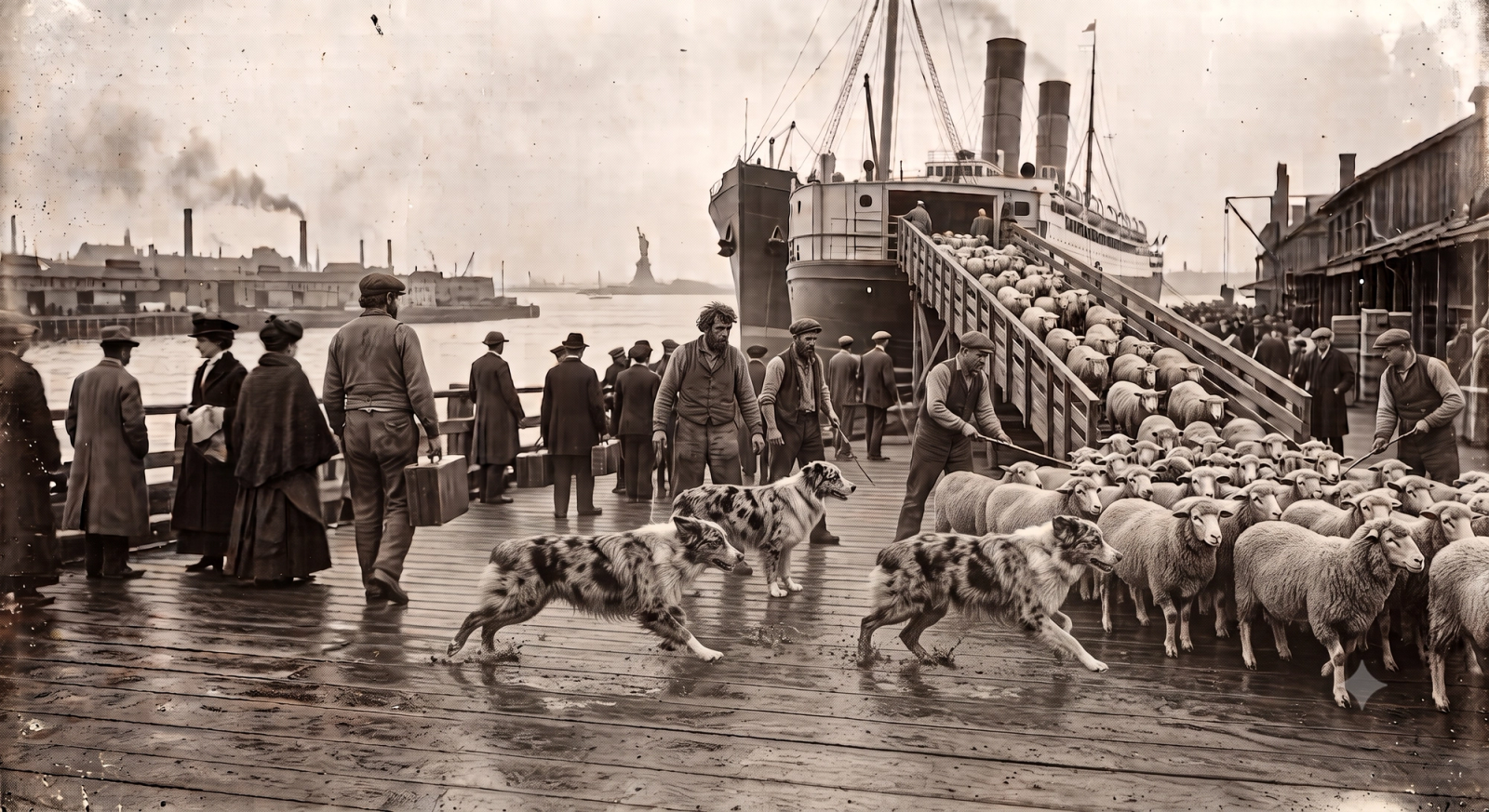
The origin story of the Australian Shepherd reads like a good detective novel with a bit of a Western flavor. The first written mention of the "little tailless blue dog" can be found in newspapers as early as 1858, though they captured ranchers' hearts much earlier. The biggest curiosity is the name. The theory goes that they arrived in the US on ships alongside sheep from Australia, yet in Australia itself, there are no records of such a recognized breed ever existing!
The real turning point happened during the 1849–1855 California Gold Rush. As thousands of fortune seekers flooded the West Coast, mountains of food were suddenly needed. California became an agricultural giant, and massive herds of sheep and cattle were driven across the state. It was then, at the ports around ships carrying Australian sheep, that these exceptionally agile, vocal, and intelligent dogs were spotted, quickly becoming irreplaceable partners for cowboys and ranchers.
World War I slowed down written documentation of the breed somewhat, but on the farms, these dogs were an invaluable asset, passed down by word of mouth (and from rancher to rancher). The scale of this working value is perfectly illustrated by historical facts from the first half of the 20th century:
Can you imagine an army of 1,000 dogs in one person's hands?
I was simply stunned by the story of Andrew Little, a 1930s Idaho sheep rancher rightly nicknamed the "Idaho Sheep King." It turns out this man kept around one thousand herding dogs across his ranches at one time—and most of them were Aussies and Border Collies! What's most fascinating is that he was so demanding about quality and working standards that hired herders were strictly forbidden from bringing their own dogs; only canines trained by Little himself were allowed to work. A fact mentioned in the book sounds almost like science fiction: a massive band of 2,200 sheep out on the range could be handled effortlessly by just one man assisted by only three or four well-trained dogs. Now that is what true working breed genetics looks like!
From a sheriff's badge to blizzard rescue operations
And what about the fun archival stories proving that Aussies were already not just range workers, but true city heroes! For example, a 1929 California newspaper clipping: an Australian Shepherd named Limey was quite seriously sworn in and became... an official deputy sheriff, whose daily duty was helping round up stray city dogs.
Another episode that deeply moved me takes us to 1940s Montana. An Aussie named Blue became a true rescuer when, through a fierce blizzard and massive snowdrifts, he ran several miles to his owner with a rescue note attached to his collar. That’s how the dog saved ranching neighbors who were cut off by snow and running out of food supplies.
Later on, Aussies became famous not only in the pastures but also in rodeo shows and Hollywood movies—after all, who better to perform a trick than the clever Aussie who simply has a vital need for a task?
Evolution of the Standard Through the Decades
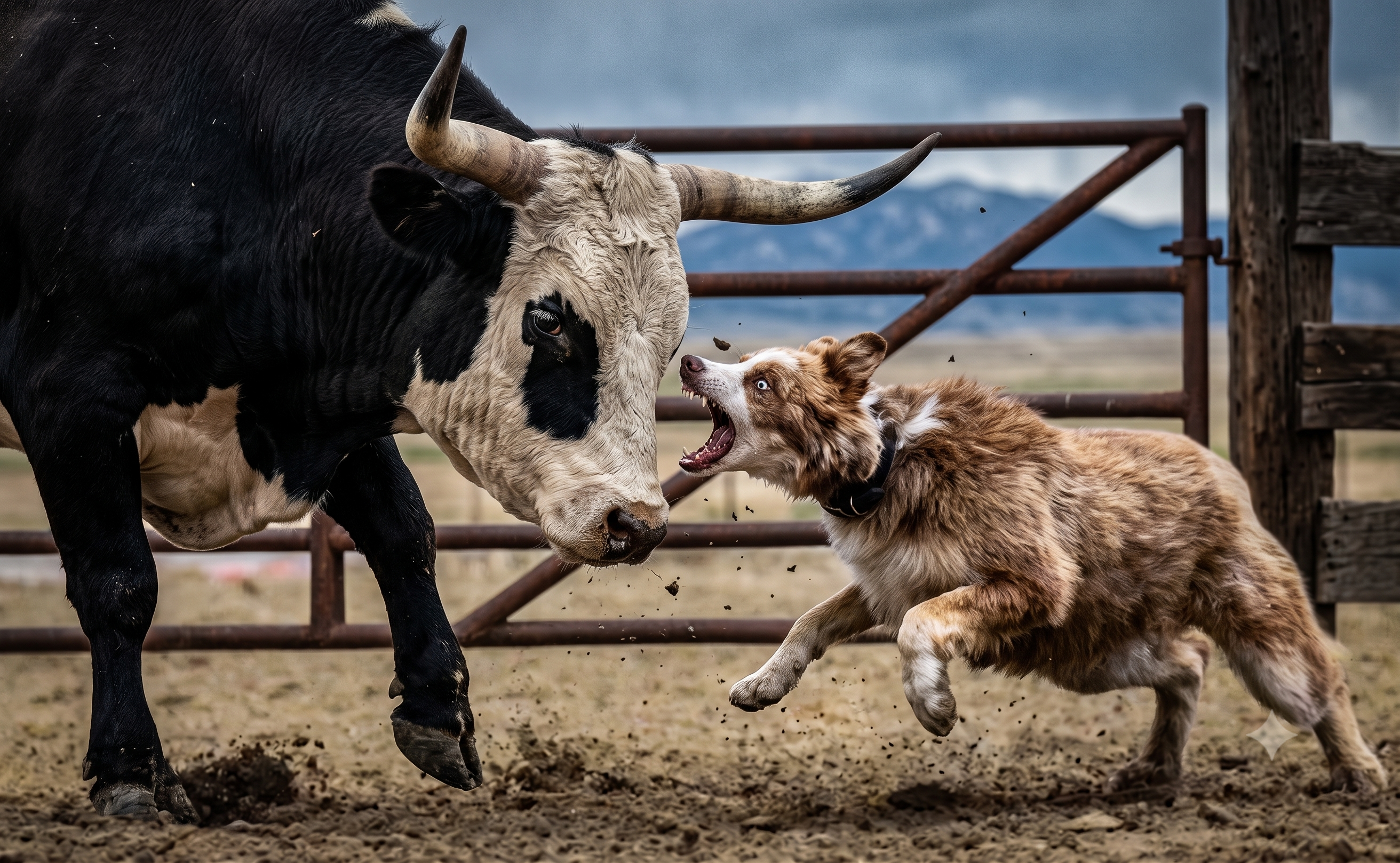
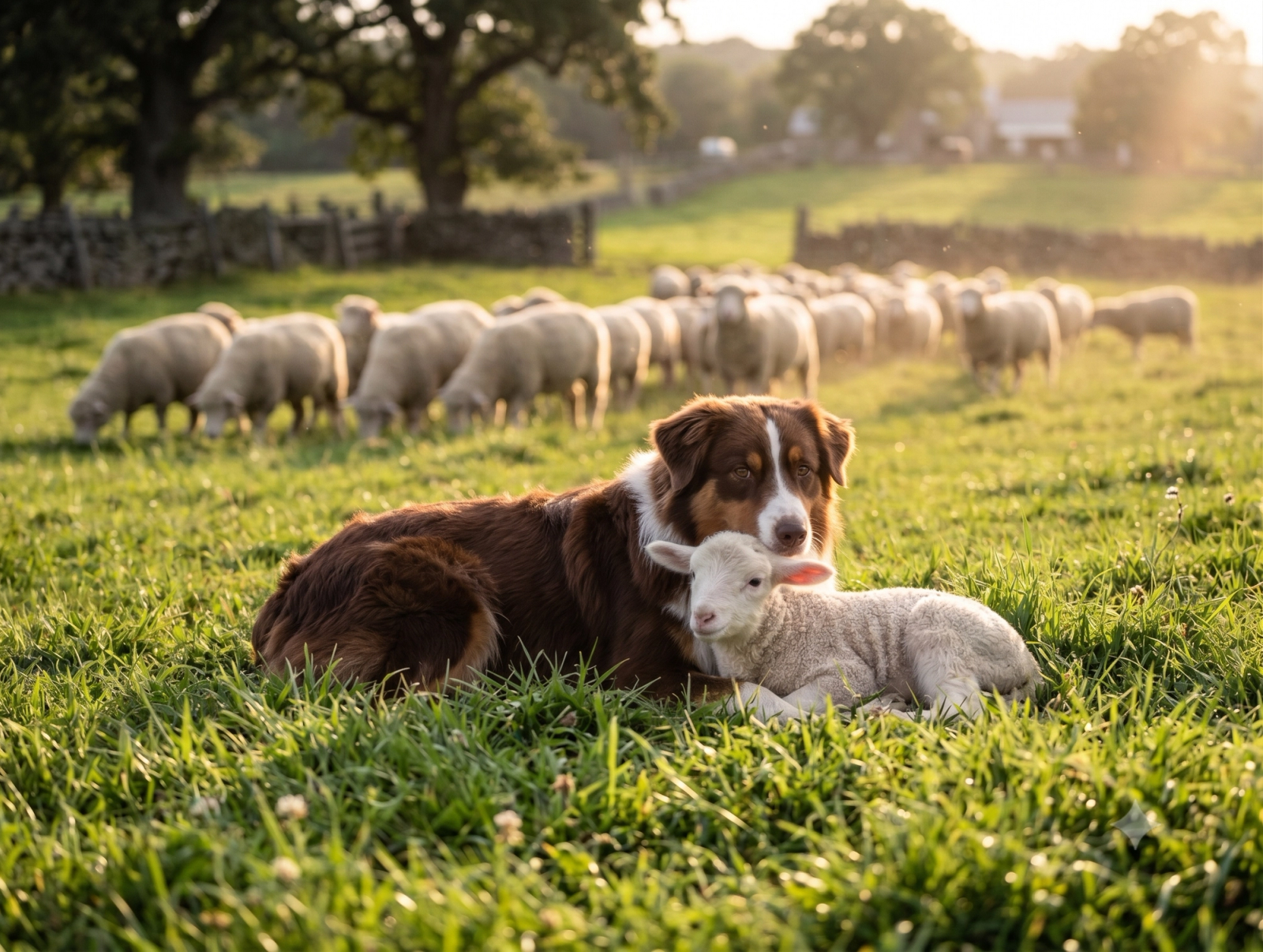
Born as herders of small livestock (sheep, goats), Aussies quickly showed that their character was too powerful for just little guys—they handle massive, stubborn cattle splendidly. The brave, swift, and incredibly maneuverable "heeler" knew how to push a bull one second and gently tend to a newborn lamb the next.
What changed, and what does it tell us about the breed?
1959
• First standard. The dog is described as solidly built, active, intelligent, and not quarrelsome.
• Acolor curiosity: Onlyblue merle is recognized! Other colors officially "do not exist."
• Eyes: Ideally of different colors (one brown, one blue).
• Height and weight: Combined for both sexes—43–53 cm (17–21 inches) and 11–18 kg (25–40 lbs); thus, Aussies of that era were noticeably lighter and smaller.
1966
• Color revolution: All modern colors are recognized.
• Health safeguard: Strict requirements are introduced for eye-rim and lip pigmentation, along with a ban on white ears or white patches around the eyes (judges realized white in these areas carries a genetic risk for deafness and blindness).
• Height: Females (46–53 cm / 18–21 in) and males (51–58 cm / 20–23 in) are separated.
1970
• Searching for the golden middle: It is emphasized that an Aussie must not be a decorative, fragile "toy," but neither can it turn into a heavy, clumsy bear.
• They must be compact enough not to crush a lamb, yet powerful enough to take a kick from a cow.
2013
• Current standard. Heights are definitively returned to the 1966 limits.
• Detailed biomechanics: Everything from coat texture to precise angles and movement mechanics is detailed.
Biomechanical Secrets from the Book: Why does every detail make sense?
N. L. Newbury's book is wonderful because it explains every point of the body through a practical lens. Here are a few of the most interesting facts that force you to look at your dog with completely different eyes:
The 11 Percent Rule (Height vs. Length)
An Aussie must be slightly longer than it is tall. Why exactly about 11% longer from the point of the shoulder to the point of the buttocks than its height at the withers? Because a square dog wouldn't have a free, ground-covering stride and would tire quickly, while a dog that is too long (e.g., exceeding a 23% ratio) loses back strength and the ability to spin around instantly when a cow decides to charge.
Leg-to-Chest Balance (1:1)
Viewed from the side, the distance from the ground to the elbow must be exactly equal to the depth of the chest. If the legs are too short, the dog loses speed and cannot drop low to the ground when working stock. If they are too long, it loses stability in turns.
Chest and Ribs – The endurance engine and the "Palm Rule"
- Oval, not barrel-shaped: Why does the standard demand ribs that are "well-sprung," with an oval chest rather than a barrel-shaped or slab-sided one? An oval chest provides an ideal surface for shoulder blade movement and maximum lung and heart capacity. If the chest is too wide, the dog's elbows will be pushed out, and its gait will become heavy and clumsy.
- The "Palm Rule" (a practical test at home): Breed pioneers and old-time ranchers had a simple rule for testing chest width. Viewed from the front, the correct distance between the dog's front legs (at the elbows) should equal the width of a human hand, including the thumb.
The Loin – The most powerful, yet most vulnerable bridge
The loin is the section of the back between the last rib and the start of the pelvis. It is the only area of the dog's body not supported by any ribs—all the load is carried solely by 7 lumbar vertebrae and a powerful muscular system. It is the bridge transferring rear propulsion forward while maintaining vertical and lateral stability.
- If the loin is too long, the dog's back starts to "roll" or dip, losing explosive power and endurance.
- If the loin is too short, the dog loses flexibility—specifically that feline agility that allows an Aussie to change direction instantly or fold in half to dodge a charging cattle horn.
The 30-Degree Angle and the "Coat Illusion" (The Croup)
The book emphasizes that the Australian Shepherd's double coat and show grooming very often obscure the dog's true anatomy. The standard calls for a moderately sloped croup (approximately a 30-degree angle).
However, the croup slope only dictates tail-set height, not rear leg angulation or drive (the pelvic angle is responsible for that). Therefore, judges and breeders cannot evaluate an Aussie by eyes alone—you must "put your hands on the dog" to feel the bones under the coat and understand whether the tail flows smoothly out of the topline without noticeable dips or bumps.
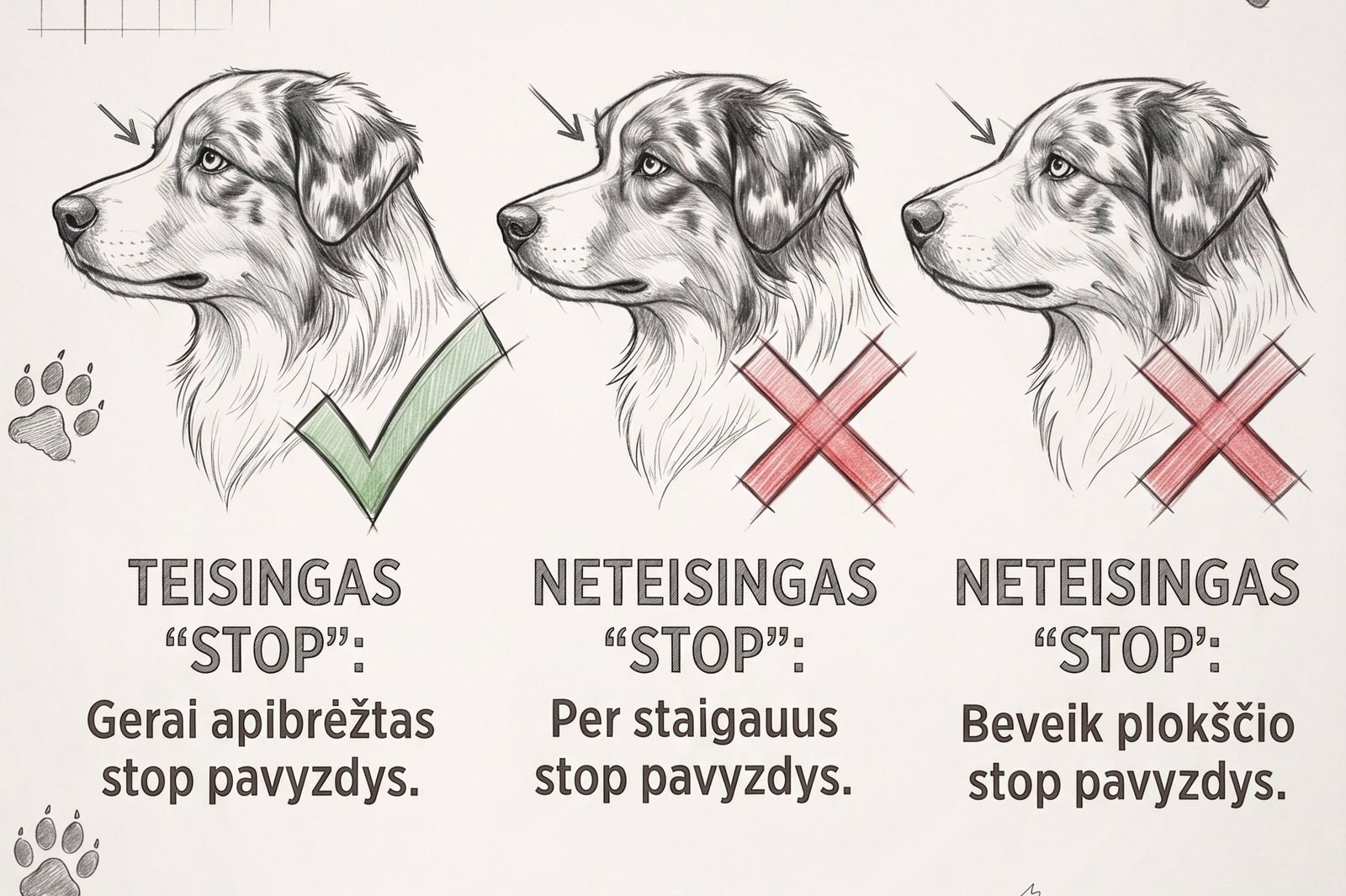
Why do we need a correct "Stop"?
The transition between the forehead and the muzzle (the stop) should be moderate and well-defined. Why? It turns out it’s not just for beauty! A proper skull slope and a slight stop act as a shock absorber, protecting the dog's brain and jaws if it accidentally gets kicked or headbutted by cattle while working.
Teeth – A working dog's knives
A full set of teeth and a proper scissor bite are vitally important for an Aussie. They don't overpower livestock—they pinch the heel and drop to the ground that exact second to avoid a kick. If the jaw is crooked or premolars are missing, the dog cannot perform this movement safely and accurately.
The Tail (or lack thereof)
A naturally bobbed tail (NBT) or docked tail historically served a very clear function—so that in a massive herd, cattle or horses wouldn't step on, grab, or pin the dog by its tail.
Eye Colors, the Merle Gene, and Blue-Eyed Secrets
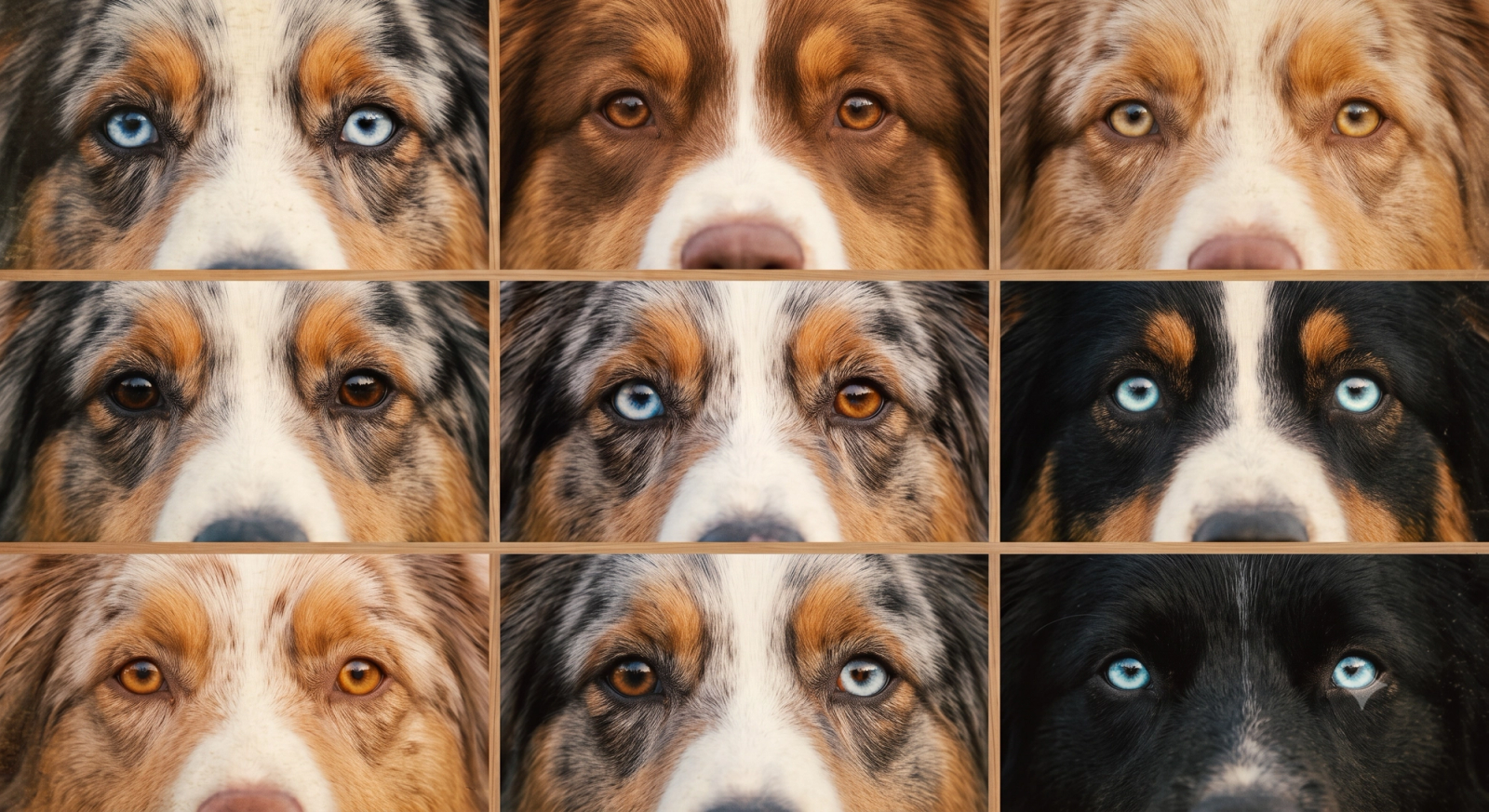
If you asked a passerby on the street what catches their eye most when they see an Aussie, 9 out of 10 would say: "Those insanely beautiful, different-colored eyes!"
The standard allows brown, blue, amber, green, and marbled eyes (when one eye has multiple colors). But genetically, it works in an incredibly fascinating way:
- The dominantcolor is brown: It isdetermined by the pigment eumelanin.
- Blue and green eyes – an optical illusion: Dogs do not have blue or green pigment! Blue or green eye color is a structural color—it occurs due to a lack of pigment in the iris when light refracts in the eye tissue (that's right, similar to why the sky is blue).
- The Merle gene's influence: During puppy development, this gene suppresses pigment distribution in skin, coat, and eye cells. That is why merle dogs so frequently have blue or "marbled" eyes.
- Blue-eyed standardcolors (Tri-colors): How does it happen that a solid black or red tri-color dog is suddenly born with sky-blue eyes?
- It can be a "cryptic merle," where the dog genetically carries the merle gene, but its coat doesn't show it.
- Or—it is an entirely separate recessive gene, which scientists only began studying in detail around 2018. This genetic mutation disrupts pigment deposition solely in the iris, without affecting the coat. For a blue-eyed tri-color puppy to be born, both parents must pass on this recessive gene (even if one parent is a merle and the other is a blue-eyed tri, that alone is not enough—in genetics, both parents must carry that specific blue-eye gene!). It's a genetic puzzle where what you see with the naked eye doesn't necessarily mean what's hidden in the DNA code!
How to Measure Your Dog's Ears at Home
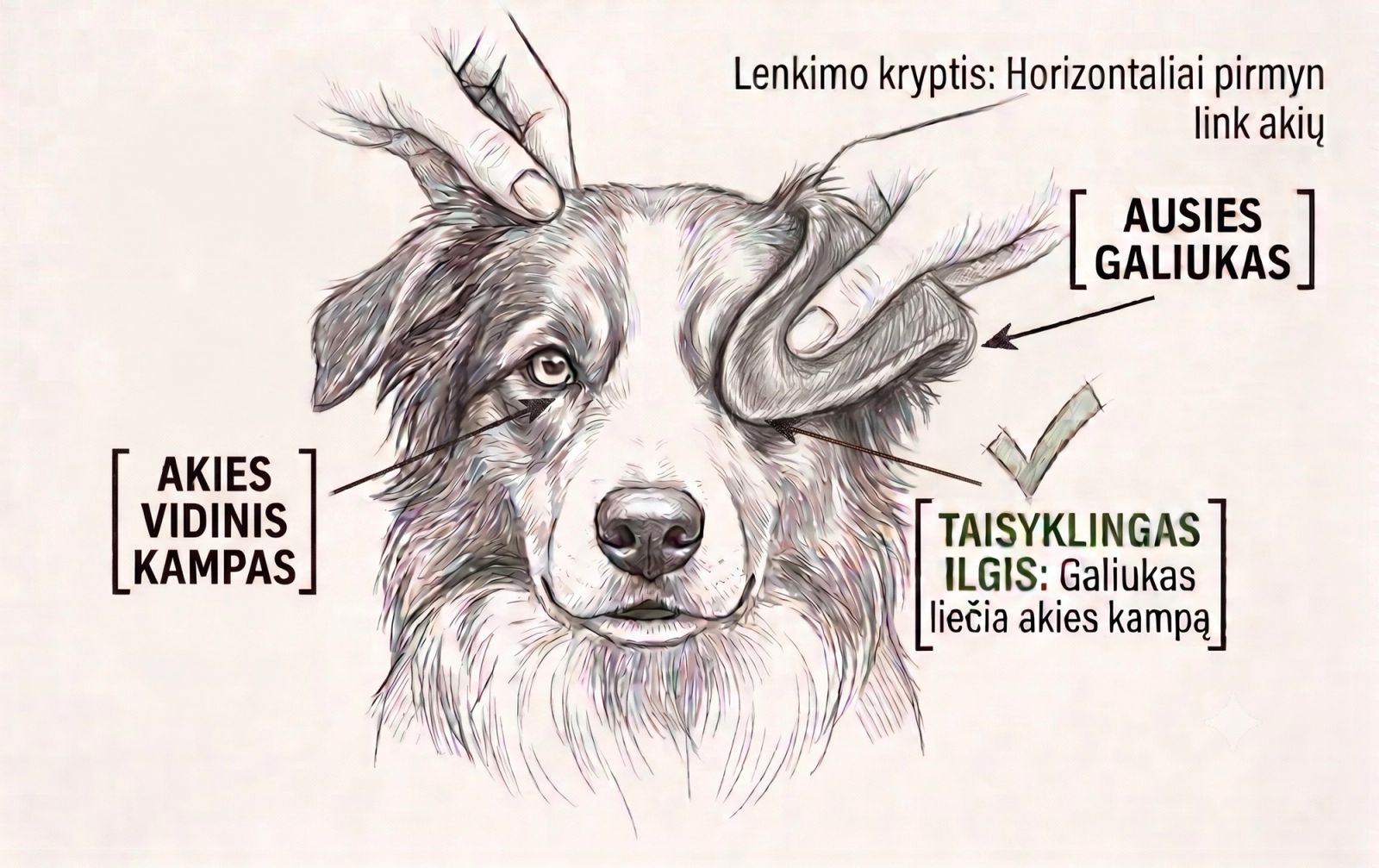
The Ear Length Test:
- Acceptable shape: "Rose" ears or ear tips breaking forward/to the side. Prick ears like a wolf or pendulous hound ears like a spaniel are off-standard.
- How to measure: Gently take the dog's ear, bring it forward, and hold it against the inside corner of the eye on the same side.
- The result: Ideal ear length is when the tip of the ear exactly reaches the inside corner of the eye! If it falls short, the ears are shorter than desired; if it covers half the nose, they are on the longer side.
Once you study your Aussie with a measuring tape and your own hands, your understanding of the breed will change forever. You will no longer look at your dog merely as a beautiful fur ball with different-colored eyes. You will see a biomechanical marvel where every angle, loin width, and rib spring has been polished for centuries so this dog can run, think, work, and love without ever tiring.
That's all for now! This article turned out hefty, but believe me, Nannette’s book holds plenty more untold treasures about the harmony of movement and the psychology of our dogs. If there is desire and demand—I will definitely write a second part! And for anyone who wants to take a broader, deeper look themselves, I highly suggest reading Nannette L. Newbury „The Australian Shepherd Ultimate Illustrated Breed Standard“, book, which holds over 400 pages of history and accumulated breed knowledge.
All rights reserved. No part of this content may be used or reproduced without written permission.